A grant can look perfect on the surface and still be a poor use of time. Before you draft, run a fast "fit test" that protects your calendar and improves your win rate.
Goal: Decide quickly whether you can submit a credible, compliant application that a reviewer can score with confidence.
The 5-point fit test
Score each area 0-2 (0 = weak, 2 = strong). A total under 7 usually means "pass or partner."
- Alignment: Your outcomes match the funder's stated priorities.
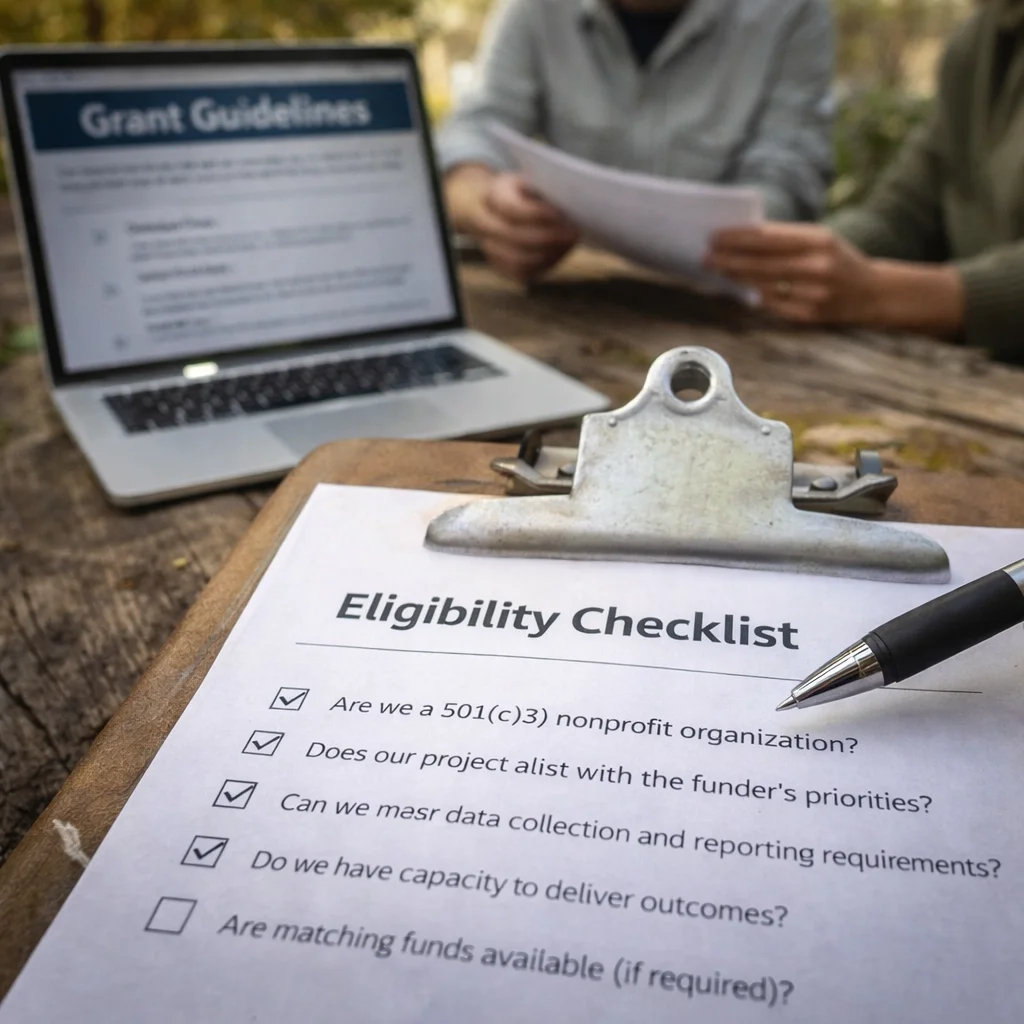
- Eligibility: Your org + project type meet the rules without gymnastics.
- Feasibility: Your team can execute within the timeline and requirements.
- Evidence: You can support need + approach with data and credible rationale.
- Competitiveness: Your plan stands out on scoring criteria.
Eligibility isn't enough
Being eligible doesn't mean being competitive. Read the purpose statement and "what they fund" examples. If your project requires twisting language to fit, reviewers will sense it.
If you have to "translate" your project into the funder's goals, you probably don't have true fit.
Capacity + timeline reality
Funders often require partners, data plans, evaluation, reporting, and procurement. Ask: can you staff it, manage compliance, and deliver outcomes on schedule?
People
Named roles, time allocations, and oversight.
Systems
Finance, tracking, procurement, reporting.
Partners
Committed, defined responsibilities, letters.
Scoring + competitiveness clues
Look for what's emphasized: equity, evidence-based models, sustainability, innovation, scalability, evaluation strength, cost effectiveness, or geographic focus. Your proposal must "overperform" on the biggest scoring buckets.
Micro-technique
Turn the scoring rubric into your outline. Use matching headings so reviewers can find points fast.
Decide: pursue, partner, or pass
If you're strong on alignment + feasibility but weak on competitiveness, partner with a stronger lead or add a data/eval collaborator. If the timeline or compliance is a stretch, pass and refocus on a better-fit opportunity.
Want a fast fit review before you commit?
Send the solicitation + a one-page concept and we'll tell you what's strong, what's risky, and how to position for scoring.
Contact The Grant Ship